As interior design trends shift toward sustainable, low-maintenance, and high-performance materials, SPC wall panels have emerged as one of the most innovative solutions in modern architecture and renovation. Short for Stone Plastic Composite, this material combines the natural strength of stone with the flexibility and resilience of advanced polymers—creating a wall cladding product that is both functional and visually appealing.
This article explores what SPC wall panels are, how they are made, their key features, benefits, and where they are best applied.
1. What Is an SPC Wall Panel?
An SPC wall panel is a rigid wall cladding product made primarily from a blend of natural limestone powder and PVC resin. Unlike traditional wall coverings, SPC panels are manufactured without adhesives or formaldehyde-based additives, making them a clean, non-toxic, and eco-friendly alternative for residential and commercial interiors.
The structure typically consists of four layers:
Layer | Function |
|---|---|
Wear-resistant Layer | Protects against scratches, stains, and daily wear |
Decorative Layer | Offers realistic textures such as wood grain, marble, or fabric |
SPC Core Layer | Provides rigidity, impact resistance, and dimensional stability |
Balance Layer | Enhances structural integrity and prevents warping |
This multi-layer engineering allows SPC wall panels to outperform many conventional materials in both durability and design flexibility.
2. Key Characteristics of SPC Wall Panels
Eco-Friendly and Non-Toxic
Because no glue or formaldehyde is used during production, SPC wall panels meet strict indoor air quality standards—making them ideal for sensitive environments such as homes, schools, and healthcare facilities.
Waterproof and Moisture-Resistant
Unlike MDF, gypsum, or wood-based panels, SPC does not swell, rot, or degrade when exposed to water. This makes it perfect for humid environments like bathrooms, kitchens, and basements.
Fire Retardant Performance
Most SPC wall panels achieve B1-level fire resistance, meaning they are difficult to ignite and slow to spread flames—an essential safety feature in public and commercial buildings.
Durable and Impact-Resistant
Thanks to the dense stone-plastic core, these panels resist dents, scratches, and everyday impacts, maintaining their appearance over years of use.
Easy and Fast Installation
SPC wall panels often feature click-lock or tongue-and-groove systems, allowing for glue-free, nail-free installation. This reduces labor time and overall project costs.
Thermal and Acoustic Insulation
The multi-layer composition helps reduce noise transmission and improves thermal comfort, contributing to more energy-efficient interiors.
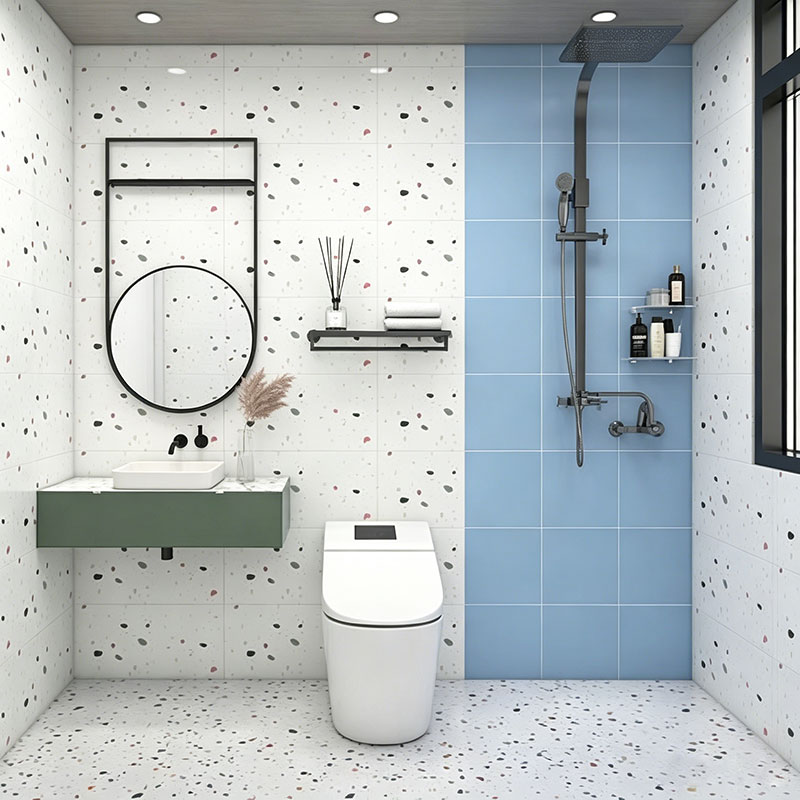
3. Advantages Over Traditional Wall Materials
Feature | SPC Wall Panel | Traditional Wood | Ceramic Tiles |
|---|---|---|---|
Water Resistance | ✅ Excellent | ❌ Limited | ✅ Excellent |
Fire Resistance | ✅ B1 Grade | ❌ Poor | ✅ Good |
Installation Speed | ✅ Fast | ❌ Slow | ❌ Slow |
Maintenance | ✅ Low | ⚠️ Medium | ✅ Low |
Design Variety | ✅ High | ✅ High | ⚠️ Limited |
In addition, SPC panels offer high cost-performance: lower material waste, reduced labor costs, and minimal upkeep expenses over time.
4. Common Applications of SPC Wall Panels
Residential Spaces
Living rooms and bedrooms
Kitchen backsplashes
Bathroom walls
Accent walls and feature walls
Commercial Interiors
Hotels and hospitality venues
Office partitions and reception areas
Shopping mall interiors
Restaurant and café décor
Public and Institutional Facilities
Hospitals and clinics
Schools and universities
Government buildings
Transportation hubs
Their combination of hygiene, durability, and aesthetic versatility makes SPC panels a preferred choice across industries.
5. Summary
SPC wall panels represent the next generation of interior cladding. By merging the natural strength of stone with modern polymer technology, they deliver a solution that is waterproof, fire-resistant, eco-friendly, and easy to install—without compromising on design.
Whether you are renovating a private residence, outfitting a hotel, or designing a healthcare facility, SPC wall panels offer a smart, future-ready alternative to traditional materials. As global demand for sustainable and high-performance building products grows, SPC is set to play an increasingly important role in shaping the interiors of tomorrow.
If you’d like, I can also help you create a concise marketing version, a technical specification sheet, or a comparison guide vs. WPC or PVC panels based on this article.